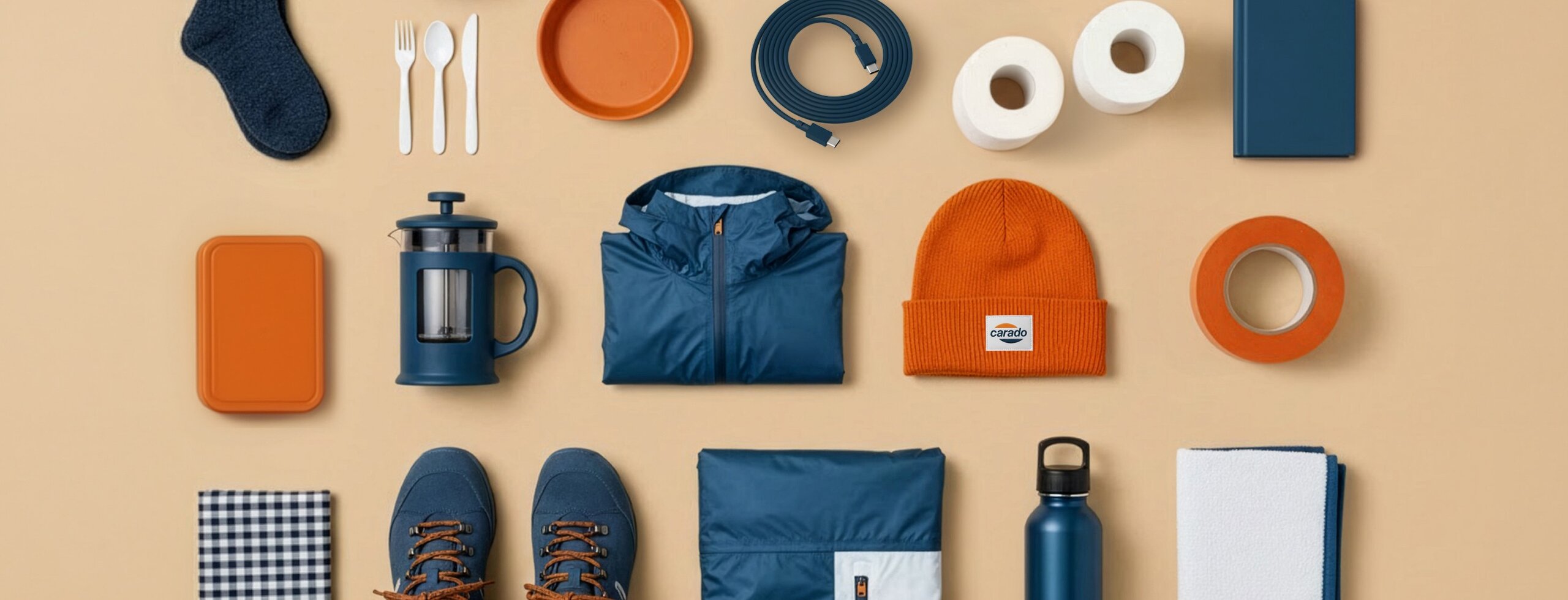
Motorhome Packing List: Everything for Your Camping Holiday
6 min. reading time

Before the Trip
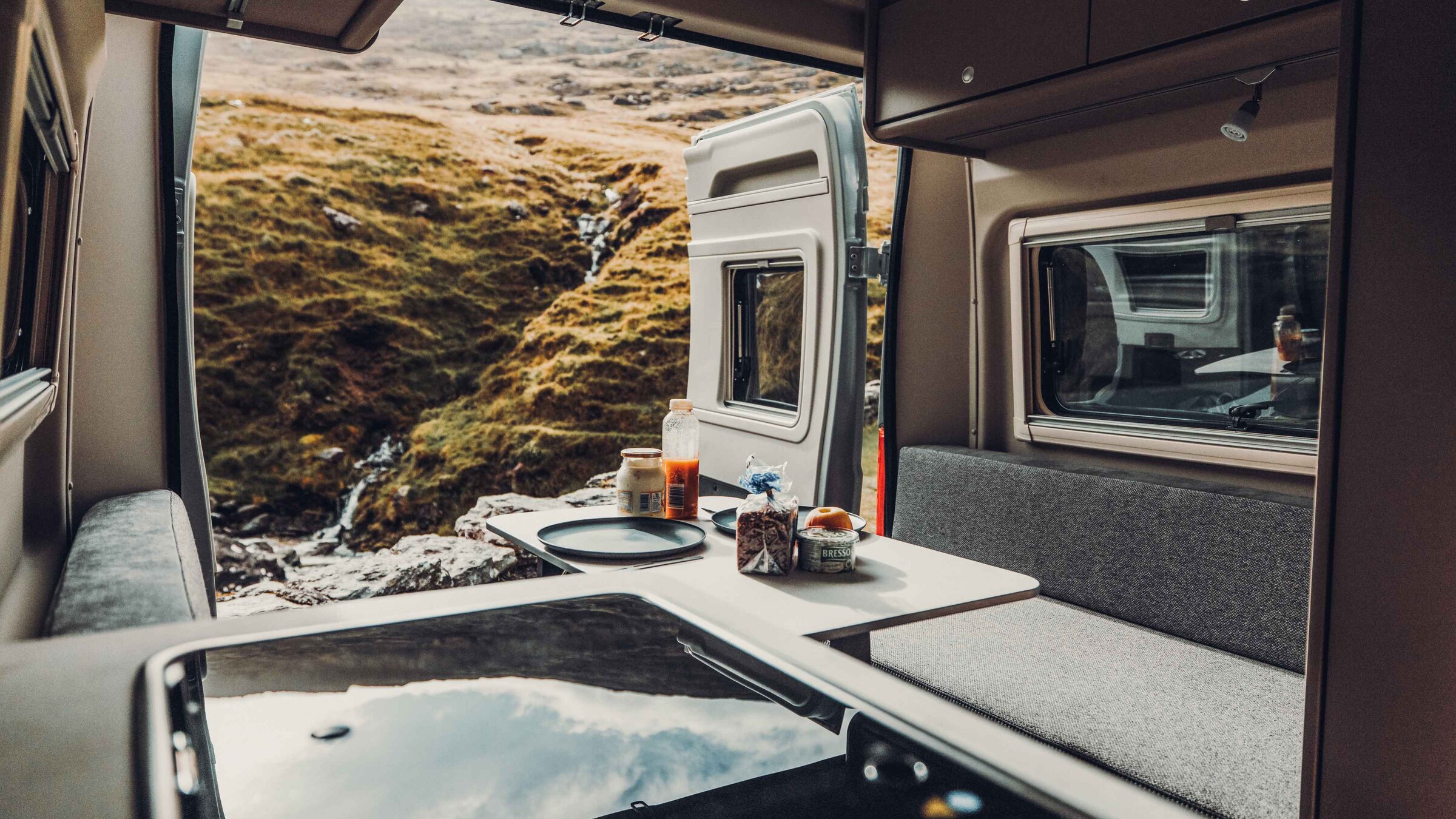
To make sure your holiday starts in a relaxed way, it is worth doing a short “pre-departure check”: everything that needs to be applied for, checked, or reserved should be completed before packing.
- Check documents: ID card/passport, driver’s license, vehicle registration certificate
- Depending on the destination: visas, international driver’s license
- Clarify insurance: foreign travel coverage/breakdown cover, and if applicable, green insurance card
- Prepare health essentials: medication, prescriptions, vaccinations/certificates if needed
- Motorhome check: inspect tires/lights/fluids, gas, and onboard systems (power supply, water, heating/hot water, refrigerator)
- Plan ahead: pitches/campsites, ferries, tolls/vignettes
- Traveling with a dog: pet passport, rabies vaccination, entry requirements of the destination country
Documents & Travel Papers
Before you start the engine, you should have all important papers within easy reach. Scan your documents and store copies securely online. A mix of cash and cards is recommended.
- IDs: identity card or passport, and visas if required
- Driver’s license: national and, if necessary, international
- Vehicle registration certificate and proof of insurance
- Gas inspection certificate and green insurance card (for trips abroad)
- Booking confirmations for campsites, ferries, and tickets
- Toll documents, vignette receipts, and parking discs
- Health documents: international health insurance, vaccination record, medication plan
- Wallet: credit cards, debit card, and sufficient cash (especially coins for machines)
Tip: Keep all documents together in a small folder and store it so it is easy to access while traveling (e.g. glove compartment/side pocket).
Vehicle & Safety
To travel safely and without stress, the legally required safety equipment should be on board – plus a few useful extras for breakdowns, gas, and theft protection.
- Required: warning triangle, high-visibility vests (one per seat), and first-aid kit
- Technical items & spares: spare bulbs and fuses, vehicle keys, spare gas bottle
- Stability: leveling wedges/wheel chocks
- Fire protection: fire extinguisher or fire extinguishing spray (optional: fire blanket)
- Gas & interior safety: gas and CO detectors
- Theft protection: steering wheel or pedal lock
- Important on the road: warning sign for overhanging loads (e.g. bike racks)
Tip: Store required safety equipment and the warning sign where they can be reached immediately (not at the very back of the storage area).
Power & Water (Supply at the Pitch)
So that your power connection and water supply work right away at the campsite, you should bring the basic essentials.
- Power: CEE cable, if necessary extension cable/cable reel
- Adapters: Schuko-to-CEE (and country-specific adapters depending on the destination)
- Sockets & charging: multi-socket extension, USB power adapter (230V) or 12V USB adapter, spare charging cables
- Water: water canister (drinking water), drinking water hose
- Connections & filling: hose adapters/connectors, funnel or watering can
- Optional: water filter, spare water pump, spare sealing rings, and if necessary greywater adapter/container
Tip: Store power and water accessories together in one box/bag – that way everything is ready in one go when you arrive.
Accessories & Electronics
For minor breakdowns, organization, and navigation, it is worth having a compact kit that is quick to access.
- Light & power: headlamp/flashlight (plus spare batteries if needed), power bank
- Charging in the vehicle: car charging adapter, spare charging cables
- Navigation: offline maps/navigation (downloaded in advance)
- Phone and internet: phone holder, mobile Wi-Fi router/hotspot if needed
- Organization: small cable bag/Velcro straps for cable management
Tip: Keep an “on-the-road bag” in the front with a multi-tool, tape, cable ties, and a lamp – it saves time during stops and minor breakdowns.
Kitchen & Household
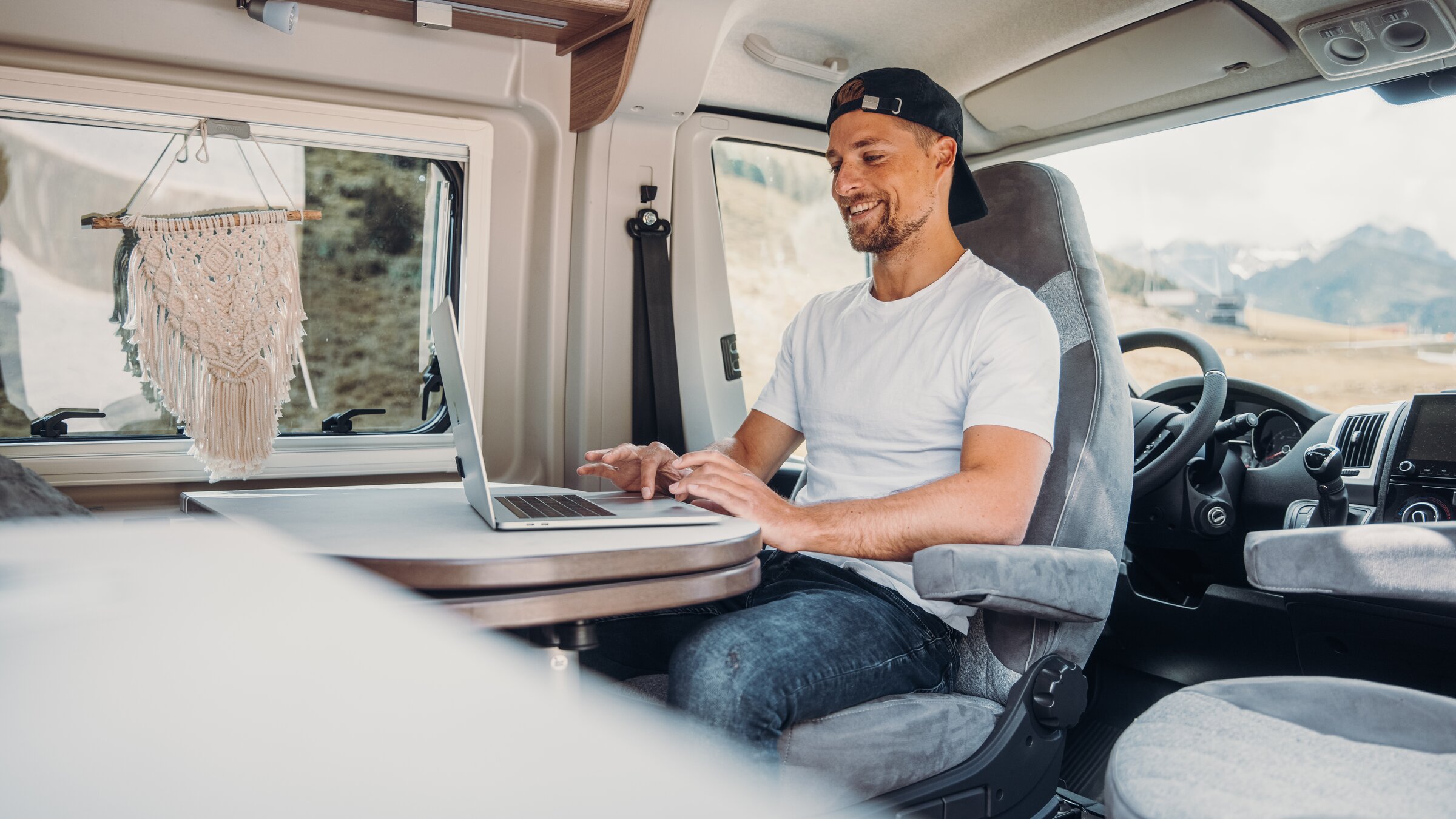
Cooking on the road is much more fun when you have the basics with you – and a few comfort items make everyday life easier.
- Cookware: pots, frying pan, cutting board, knife, cooking utensils (e.g. wooden spoon, spatula)
- Crockery & cutlery: plates, bowls, cups/glasses, cutlery for all travelers
- Kitchen helpers: can/bottle opener, corkscrew, spice shaker
- Washing up & drying: dishcloth/sponge, washing-up liquid, washing-up bowl, tea towels
- Storage & organization: garbage bags, zip bags, food storage containers, aluminum foil, non-slip mats in drawers
- Supplies (basics): pasta/rice, coffee/tea, long-life milk, canned food, sugar/salt/pepper, spices, oil/vinegar
- Fresh food for the start: bread, butter, fruit/vegetables, cheese/cold cuts (adapt the first shopping trip to your destination)
- Appliances (depending on setup): camping grill, coffee machine/French press, camping oven, scales
- Household helpers: clothesline and pegs, broom & small dustpan, bucket, kitchen paper
Tip: Non-slip mats and stackable boxes reduce rattling and keep cupboards tidy even while driving.
Sleeping & Clothing
Sleep well and be prepared for any weather – with a few essentials (and without packing unnecessarily).
- Clothing (basics): T-shirts, trousers/shorts, sweater/fleece, functional clothing, swimwear, headwear
- Weather: rain jacket, light windbreaker, rain trousers if needed, umbrella, beanie/headband (and gloves depending on the season)
- Shoes: sturdy shoes, light shoes, slippers/sandals
- Laundry: underwear, socks, sleepwear
- Bedding: fitted sheets, bed linen or sleeping bags, blankets, pillows
- Sleeping comfort (small but important): earplugs, sleep mask, small night light if needed
Tip: It is better to plan in layers (several thin layers) rather than bringing just a few thick items of clothing.
Hygiene & Health
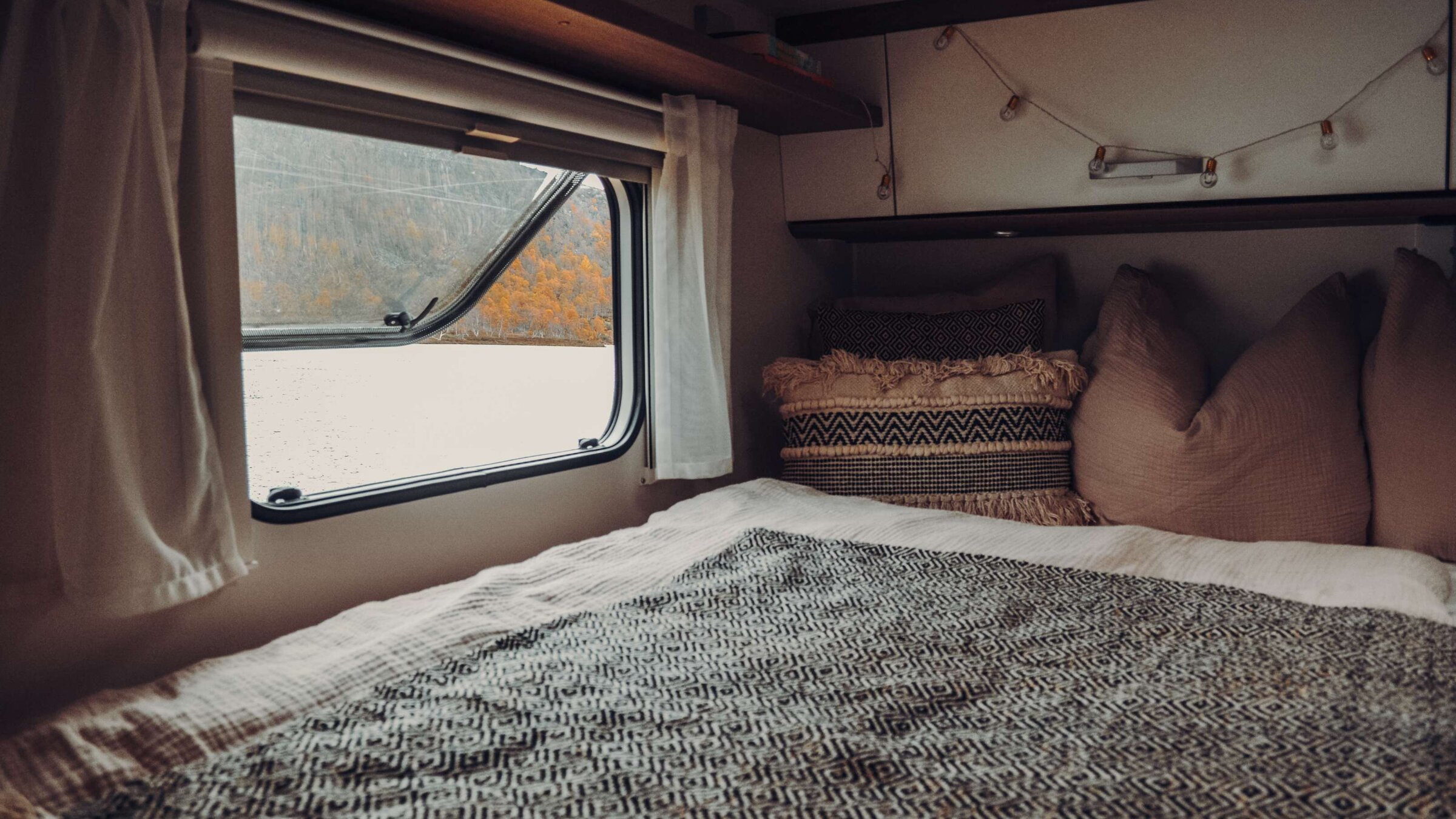
To keep personal care and minor emergencies simple while traveling, a compact basic set should always be in the bathroom.
- Basics: towels, washcloths, toiletry bag
- Personal care: toothbrush/toothpaste, shampoo/soap, deodorant, razor, brush/comb
- First-aid kit: plasters/bandaging materials, disinfectant, painkillers, personal medication
- Protection: sun protection, mosquito repellent (depending on the destination)
- Toilet: camping-friendly toilet paper, toilet chemicals, wet wipes, hand soap
- Laundry: detergent for hand washing
Tip: Pack your first-aid items and toilet supplies separately (2 small bags) – that way you can find the right thing immediately when needed.
Leisure & Outdoor
Sitting outside, cooking, relaxing – with just a few items, your pitch quickly becomes a living room.
- Camping furniture: camping table, camping chairs, doormat
- Sun protection: awning/sun sail/awning tent (including pegs/ground anchors)
- Ground cover: outdoor rug/awning carpet or picnic blanket
- Fastening & securing: tension straps, spare pegs/ground anchors
- Outdoor cooking: grill or camping stove, lighter/gas igniter
- Light: camping lamp, optional string lights
- Entertainment: card/board games, books, travel guides (optional: binoculars/hammock)
- Sports (optional): bicycles, SUP, hiking gear (depending on destination)
Tip: Pack a pair of work gloves – they save your hands when dealing with pegs, the grill, and wet equipment.
Breakdown Assistance & Tools
For typical on-the-road problems, a small kit is often enough – the important thing is that it is complete and easy to access.
- Tools: multi-tool or small toolbox (screwdriver, pliers, Allen keys; optional hammer)
- Repair helpers: duct tape/electrical tape, cable ties (optional: wire)
- Wheel/breakdown: jack, lug wrench, tire repair kit or spare wheel (depending on the vehicle)
- Jump start & towing: jump leads, optional tow rope
- Tires & air: tire pressure gauge, optional small compressor
- Optional: spare fuel canister (only if permitted and truly necessary)
Tip: Pack everything into a “breakdown box” and store it so you can reach it without unloading everything else.
Traveling with Children
So that everything is within easy reach on the road (food, sleep, entertainment) and stops are less stressful.
- Safety: child seat/infant carrier
- Sleeping: travel cot or bed guard, cuddly blanket/favorite stuffed toy if needed
- Food & drink: water bottles, snacks, children’s cutlery/bibs
- On the road: wet wipes, spare outfit (plus rain/mud clothing if needed)
- Entertainment: small games/books/coloring supplies (compact)
Tip: Pack a “stop bag” (snacks, wet wipes, 1 spare outfit) – keep it in the front, and it saves a huge amount of time during breaks.
Traveling with a Dog
So that your dog stays safe, cared for, and under control while traveling – even during spontaneous stops.
- Basic equipment: leash (short + long lead if needed), collar/harness, poop bags
- Food & water: dog food, bowl (ideally foldable), water bottle
- On the road & at the pitch: dog blanket/sleeping area, towel (for paws/dirt)
- Health: tick remover, medication/first-aid kit if needed
- Documents (depending on destination): EU pet passport/vaccination record (including rabies), microchip proof if required, and country-specific entry requirements
Tip: Keep the leash, poop bags, bowl, and pet passport together as a “dog walking set” – these are the first things you need at every stop.
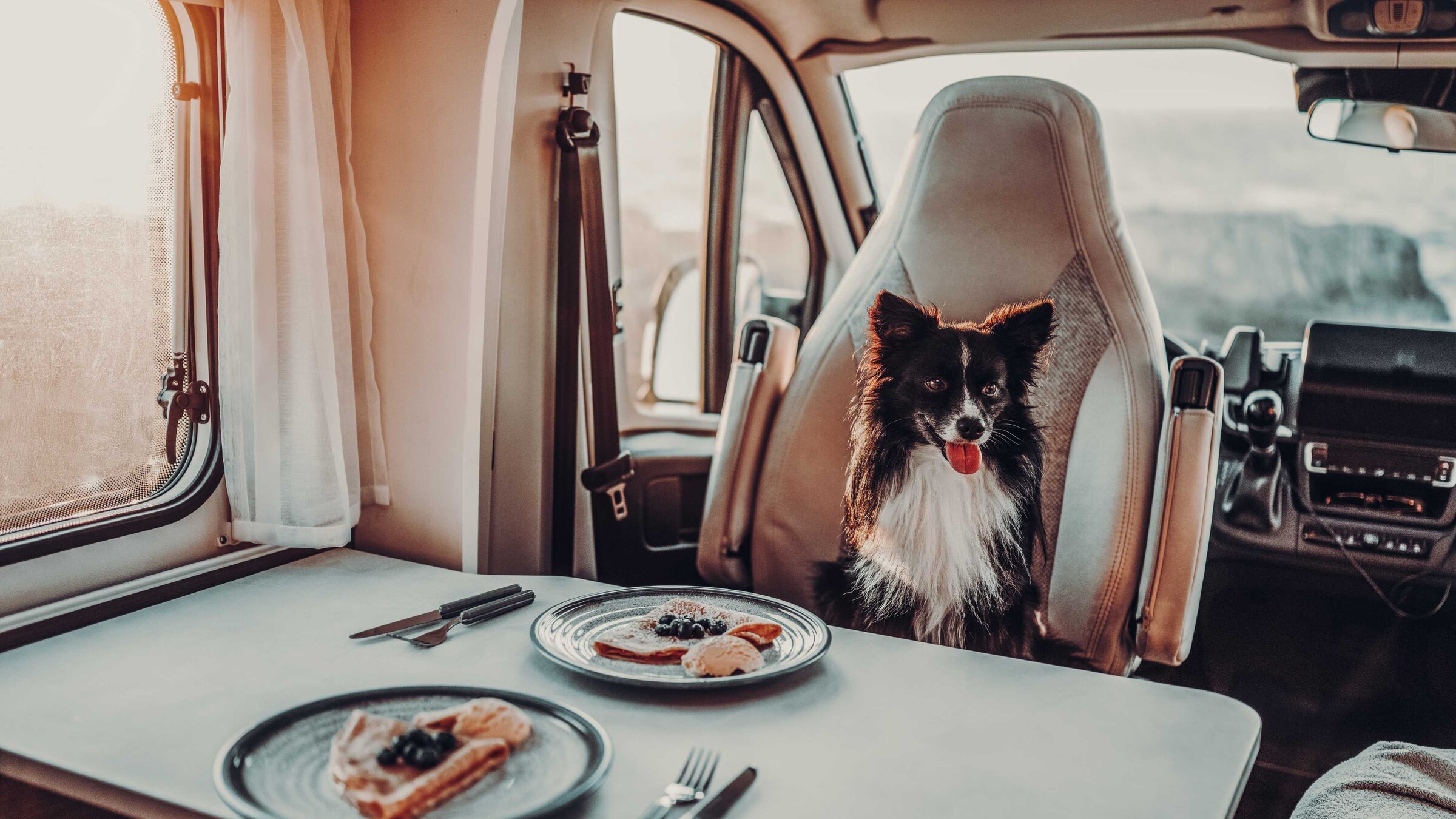
Ready to Depart?
Download the motorhome packing checklist as a clear PDF – ready to print or tick off digitally. That way, you keep track while packing, go through the most important points step by step, and set off with the reassuring feeling that you have thought of everything important.
Frequently Asked Questions About the Packing Checklist
-
In Germany, this includes the safety equipment (high-visibility vest, warning triangle, first-aid kit) as well as your driver’s license and vehicle registration certificate Part I. Depending on your destination, additional requirements may apply (e.g. extra high-visibility vests or specific equipment).
-
Besides the mandatory documents, booking confirmations, emergency contacts, insurance papers (e.g. international health insurance), and, if applicable, the green insurance card are helpful – especially when traveling abroad. That way, everything is quickly at hand if needed.
-
Place heavy items low down, as close as possible to the center of gravity, and secure everything (boxes, anti-slip mats, tension straps). Items you need on the road (e.g. high-visibility vest, charging cable) should be kept within easy reach in the driver’s cabin.
-
Check all gas and electrical connections. Are the gas bottle valves closed? Are all cable connections disconnected? A quick check ensures a worry-free journey.


